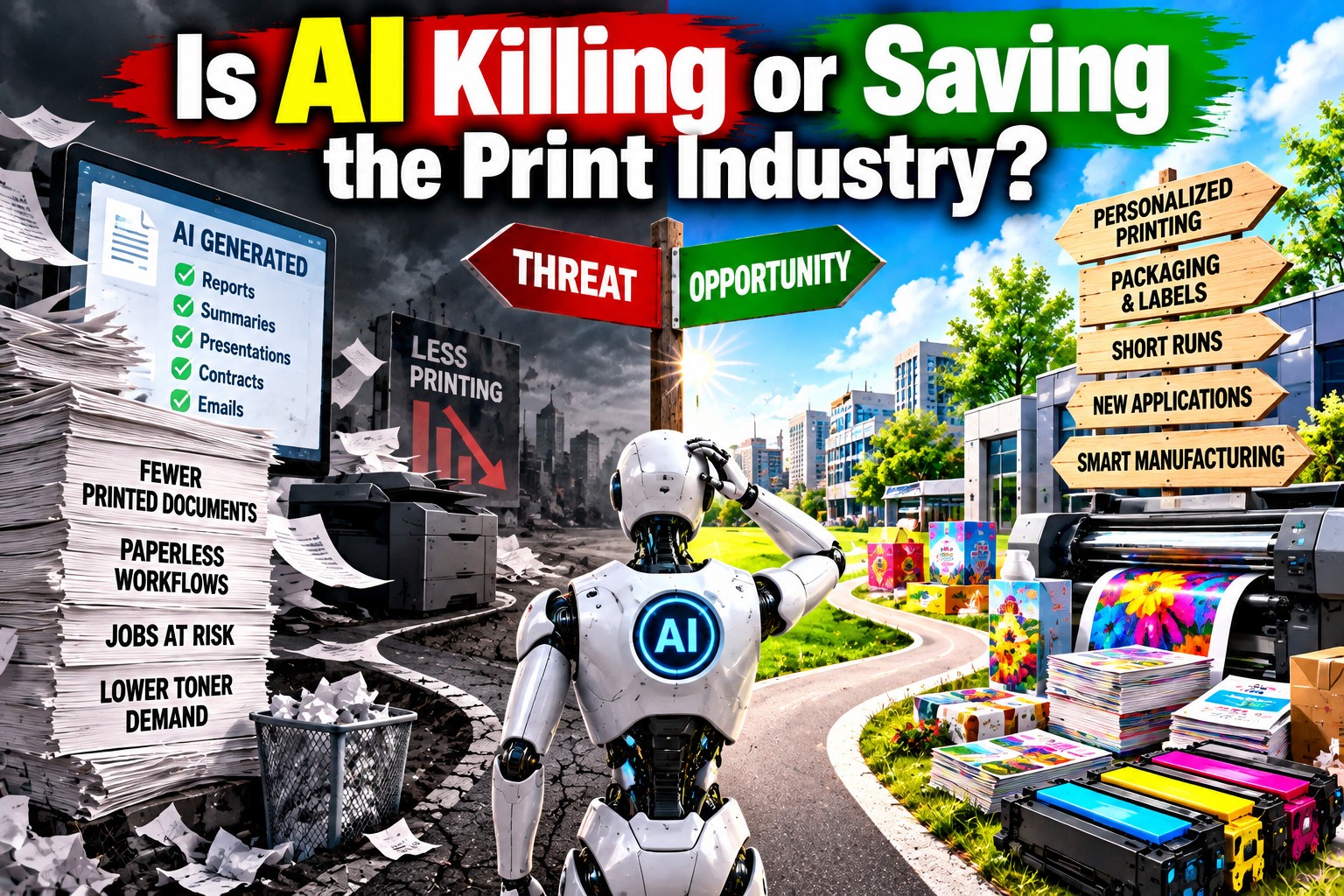
Artificial intelligence is being sold as the future of business, but for the printing industry, could it become a nightmare disguised as progress? As AI tools generate documents, summarize reports, replace printed reference materials and push businesses toward paperless workflows, the printing industry faces an uncomfortable question: Is Big Tech building a future that needs fewer printers, less paper and fewer toner cartridges? The latest PRINTING United Alliance AI research promotes AI as a competitive advantage, yet efficiency gains do not necessarily translate into more pages printed, more printers sold or higher toner and ink consumption. Meanwhile, the American Forest & Paper Association reported that U.S. printing-writing paper shipments fell 7% year over year in August 2026, highlighting the ongoing pressure on traditional paper demand—even though the decline cannot be attributed to AI alone. A FESPA industry survey also found that approximately 40% of surveyed print service providers were not using AI, raising questions about whether the promised revolution is delivering meaningful benefits across the entire industry or primarily benefiting technology vendors and larger, better-funded businesses. AI may create opportunities in packaging, labels and automated production, but will those gains compensate for the documents, publications and office pages that disappear into digital systems? For printer manufacturers, OEM supplies divisions, aftermarket toner suppliers and remanufacturers, the stakes are enormous: AI could make printing businesses more efficient while simultaneously shrinking the market they depend on. Is artificial intelligence really the printing industry’s savior—or is the industry embracing a technology that could help accelerate its own decline?