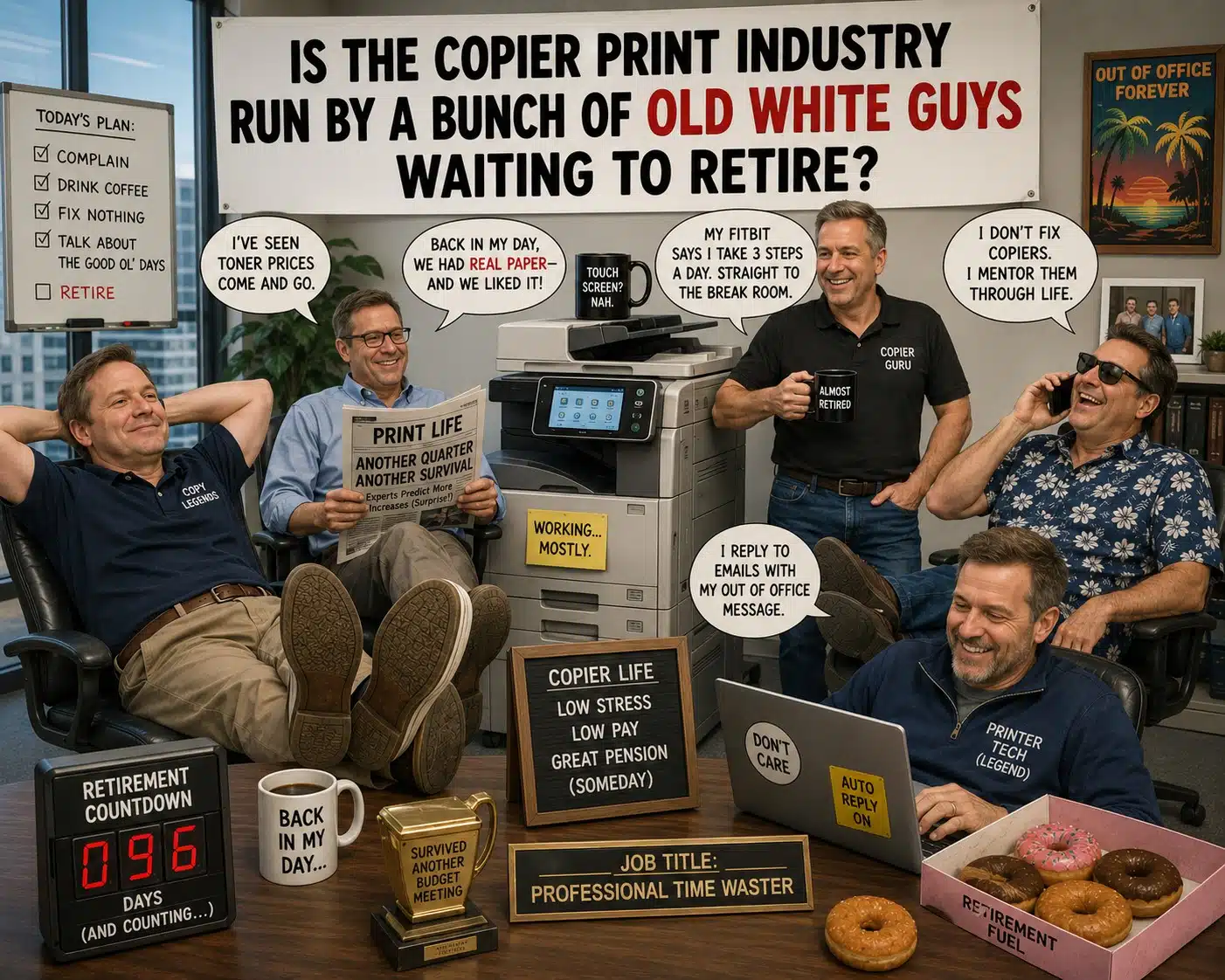
For decades, the copier industry has looked like a private country club for aging white men clinging to commissions, golf-course relationships, and outdated sales tactics while waiting out retirement packages. Walk into many traditional dealerships and you still find leadership teams that haven’t meaningfully changed since the fax machine era—executives promoting the same people who think “digital transformation” means adding scan-to-email. Critics argue the industry became insulated, resistant to diversity, and allergic to innovation because too many decision-makers prioritized protecting old profit margins over adapting to modern business realities. While younger professionals and more diverse talent are entering the space through IT services, automation, and software solutions, they often describe hitting a wall of entrenched culture, nepotism, and “this is how we’ve always done it” thinking. The uncomfortable truth is that parts of the copier business are still being run like it’s 1997, and unless the old guard either evolves or exits, the industry risks becoming irrelevant faster than the machines it once sold by the thousands.