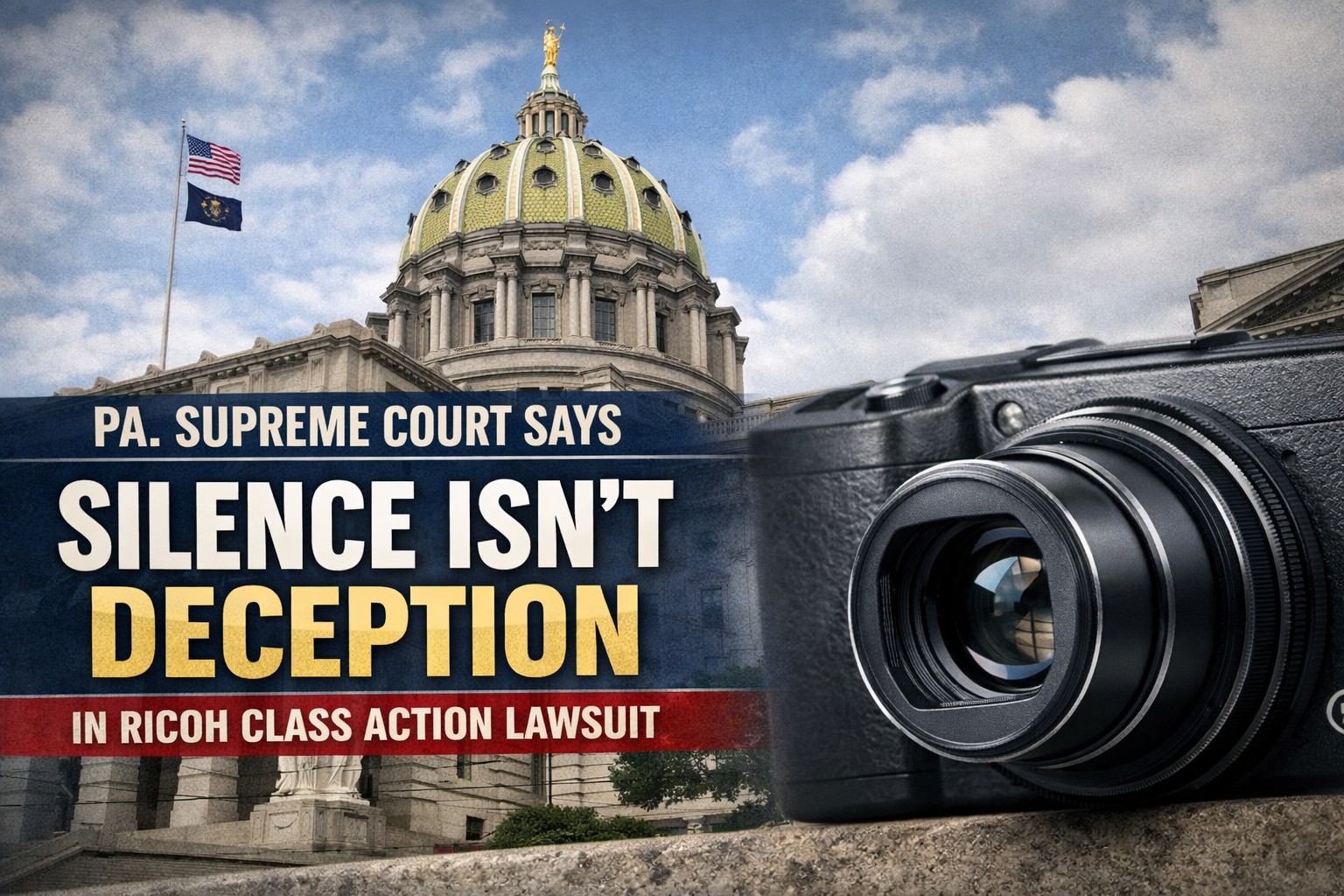
In a sharply divided ruling, the Pennsylvania Supreme Court sided with Ricoh in a class action brought by Robert N. Halpern, holding that the company’s failure to disclose an alleged camera defect does not amount to consumer deception under state law. The court emphasized that silence alone is not fraudulent unless a company has a clear legal duty to speak—such as in cases involving partial disclosures or special relationships—and found no such obligation in this instance. While the majority concluded Ricoh cannot be held liable for merely withholding information about the claimed aperture issue, dissenting justices warned the decision could weaken consumer protections by allowing companies to avoid disclosing known product flaws, potentially leaving buyers with fewer legal remedies when defects are discovered after purchase.