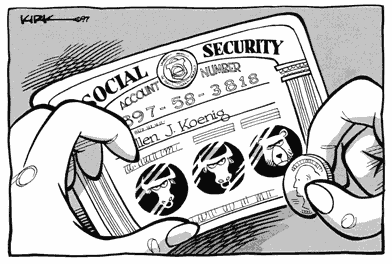
U.S. Social Security Office Scraps Paperless Statement Experiment
By NDG Staff Jason Alderman
Call it a paperless experiment that didn’t quite pan out. In 2011, a budget-strapped Social Security Administration (SSA) stopped mailing annual benefit statements to workers over 25 in order to save $70 million on annual printing and mailing costs.
In return, the agency launched the “my Social Security” online tool that allows 24/7 access to your statement, as well as other helpful information. (Your statement shows a complete record of your taxable earnings as well as estimated retirement, disability and survivor benefits.)
Although more than 13 million people have opened accounts, that’s only about 6 percent of the American workforce. With millions of Baby Boomers at or approaching retirement age, Congress was justifiably concerned that not enough people were accessing this critical retirement-planning tool.
That’s why this month SSA will resume mailing paper statements every five years to workers from ages 25 to 60, provided they haven’t already signed up for online statements. The expectation is that more people will migrate to electronic services over time, as Social Security continues to close field offices and reduce in-office paperwork services – thanks to years of funding cutbacks.
The paper statements are a good first step, but creating an online account allows you to log in anytime.




















 .
.