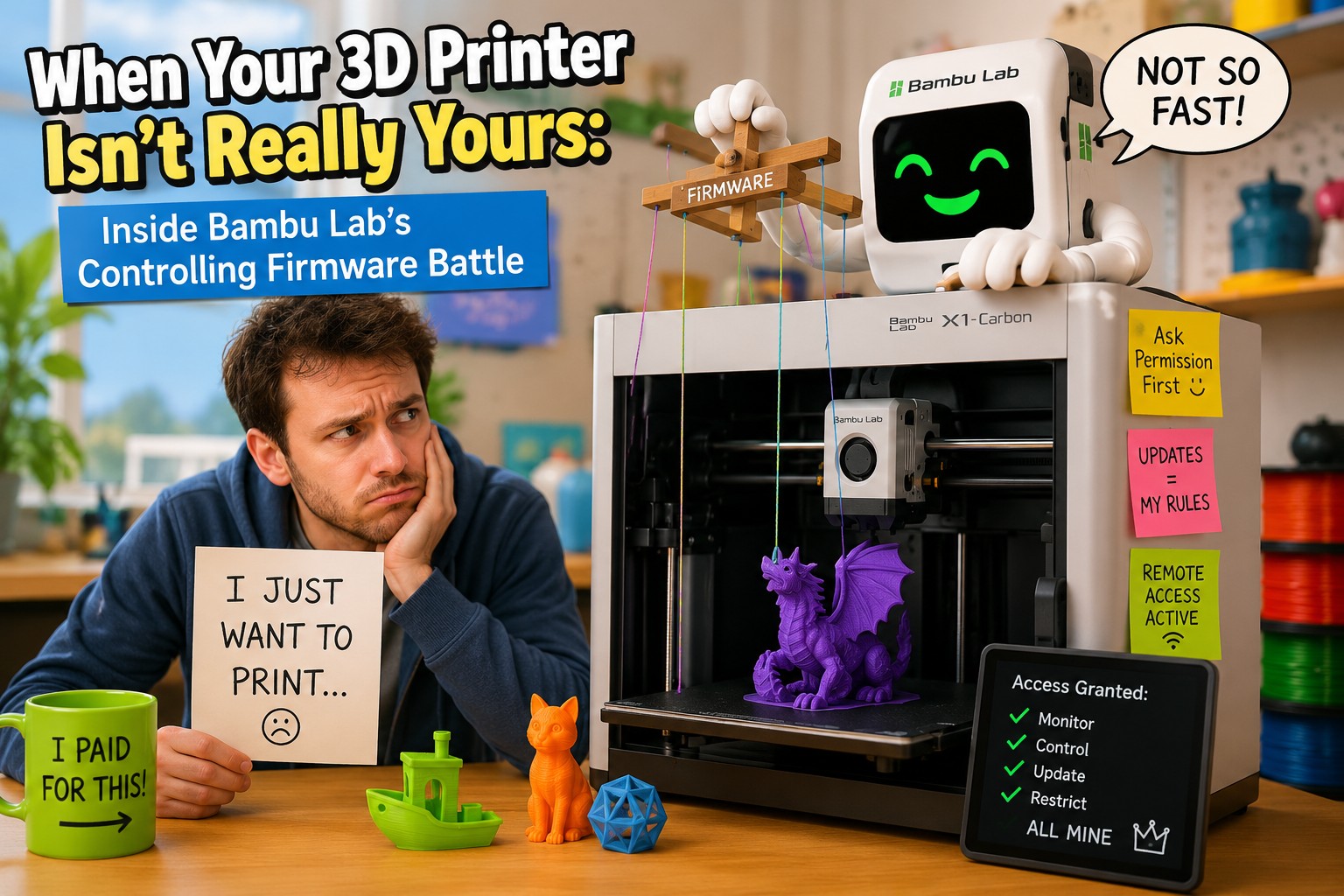
Bambu Lab has ignited one of the most controversial fights in the 3D printing world by asserting legal pressure over a developer who re-enabled features the company itself had disabled—essentially telling customers that buying the machine doesn’t mean controlling it. The shutdown of the OrcaSlicer-BambuLab project exposed a hard truth many users don’t want to accept: modern 3D printers are no longer just tools, they’re locked platforms where the manufacturer can quietly dictate what works, what breaks, and what disappears after a firmware update. Critics argue this crosses a line from product support into outright control, turning expensive hardware into something closer to a licensed service than personal property. Supporters claim it’s about security and system stability, but the optics are hard to ignore—when a company can remove functionality and threaten those who restore it, “ownership” starts to look more like permission. For the broader maker community, the message is unsettling: the future of DIY hardware may depend less on what you build, and more on what the manufacturer allows.