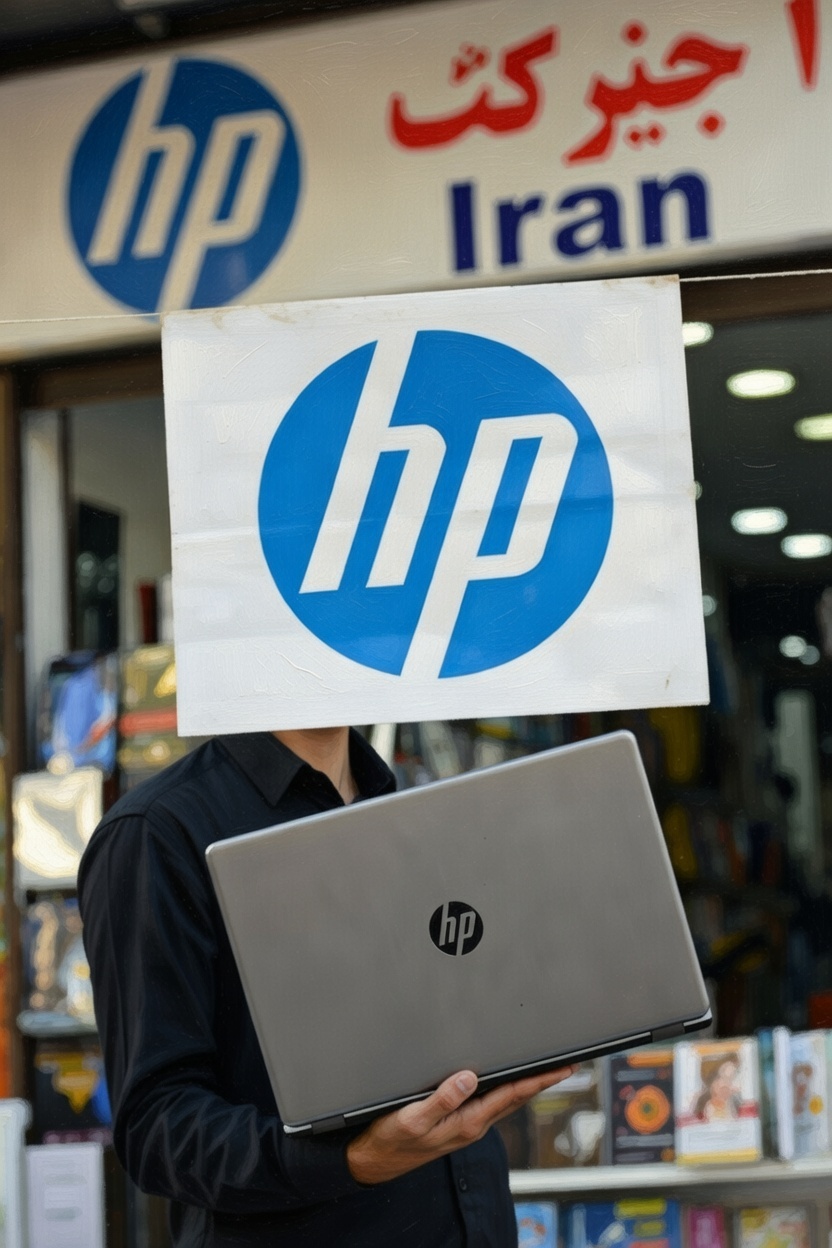
As of March 2, 2026, Hewlett-Packard (HP) products remain some of the most ubiquitous technology in Iran, despite decades of comprehensive U.S. trade sanctions. While HP Inc. officially maintains that it has no employees, facilities, or direct sales operations in the country, a “shadow economy” of distributors and third-party networks ensures that HP hardware—from high-end servers to consumer printers—remains the market leader in the Islamic Republic.
The “Dubai Loophole” and Redington Gulf
For years, the primary engine behind HP’s presence in Iran was a strategic partnership with Redington Gulf, a distributor based in Dubai. A Planned Market: Redington Gulf was reportedly established in 1997 with the specific purpose of selling HP supplies to the Iranian market.
Legal “Grey Areas”: By routing transactions through a Dutch subsidiary, Hewlett-Packard Europe B.V., and using a non-U.S. distributor, HP argued it was adhering to the “letter of the law” even if it bypassed the spirit of the embargo.
Market Dominance: This strategy was so effective that by 2007, HP printers held an estimated 41% share of the Iranian market.
Official Stance vs. Reality on the Ground
When scrutinized by the U.S. Securities and Exchange Commission (SEC) in 2008 and 2009, HP officially pledged to clarify contracts to explicitly prohibit the sale of its products in Iran. However, the reality in Tehran’s tech hubs like Vanak Square tells a different story: Omnipresence: HP products are still stacked “ceiling to floor” in many Iranian retail stores.
Local Support: Local entities like Falnic (Iran HP) continue to provide comprehensive warranties and technical support, operating as the de facto face of the brand within the country.
Dual-Use Risks: Concerns persist that these products reach major state-linked entities, such as MTN Irancell, through procurement networks involving companies like Huawei and ZTE.
2026: The Impact of “Maximum Pressure”
The geopolitical landscape in early 2026 has introduced new challenges for this resilient trade: 25% “Secondary” Tariffs: In January 2026, the U.S. announced a 25% tariff on any country—most notably the UAE and China—that continues to do business with Iran. This move is specifically designed to dismantle the third-party hubs that HP products have historically moved through.
Currency Collapse: The Iranian rial is currently facing extreme volatility, making the import of high-end Western hardware increasingly expensive for local businesses.
Digital Iron Curtain: While the hardware exists, the Iranian government’s move toward a restricted “white list” internet often limits the full cloud functionality of modern HP devices.
Summary: The Allure of the Forbidden. Ironically, U.S. sanctions have contributed to HP’s prestige in Iran. To many Iranian consumers, American products carry an “allure of the forbidden,” representing superior quality that justifies the high costs of the illicit supply chain. While HP Inc. continues to assert complete compliance with all U.S. export laws, the “HP Iran” phenomenon stands as a testament to the difficulty of enforcing digital borders in a globalized economy.
The information on this site has been included in good faith for general informational purposes only. It is not intended to amount to advice on which you should rely, and we give no representation, warranty, or guarantee, whether express or implied as to its accuracy or completeness. You must obtain professional or specialist advice before taking, or refraining from, any action based on the content on our site.