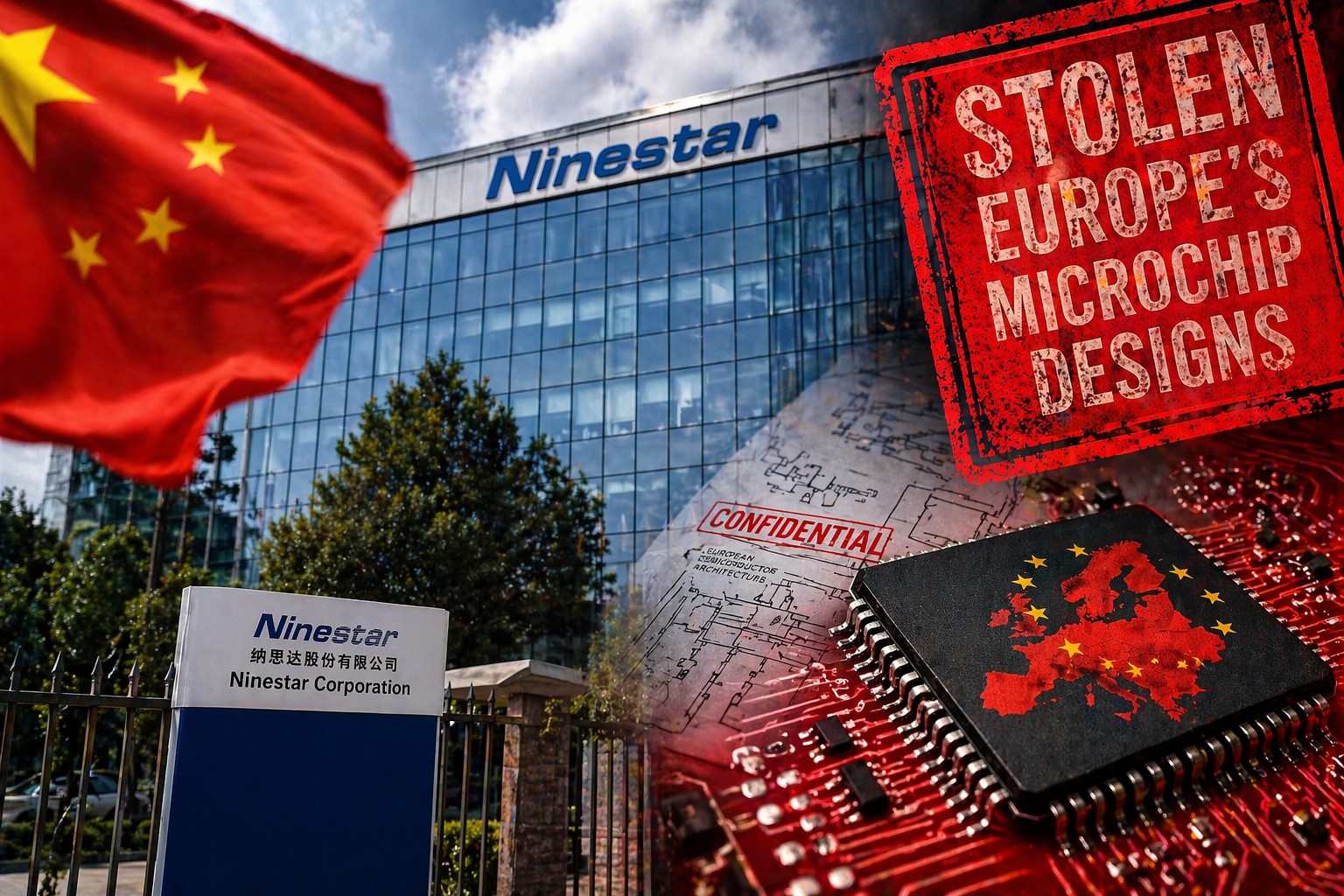
Is Ninestar expanding its reputation from aggressively competing
in printer consumables to becoming an outright silicon chip copy-cat counterfeiter?
That question is intensifying as engineers dissect APM32 microcontrollers from its subsidiary Geehy Semiconductor, which appear uncannily similar to the STM32 family produced by STMicroelectronics—one of Europe’s largest chipmakers and a cornerstone supplier for industrial and embedded systems worldwide. STM32 devices are among the most widely used microcontrollers on the planet, yet Geehy’s APM32 lineup is not just “compatible”—it is frequently described as a drop-in mirror, matching pinouts, registers, peripherals, and even firmware execution with no required changes. That level of duplication goes far beyond traditional second-sourcing and has triggered alarm bells in the engineering community, particularly as reverse-engineering reports point to near-identical bootloader behavior, matching memory maps, and the replication of obscure, undocumented edge cases—signals that some argue are difficult to achieve without access to proprietary implementations. While both product lines rely on licensed cores from Arm Holdings, the controversy centers on everything wrapped around that core: the system architecture, firmware, and low-level behavior that define a chip’s identity. Critics warn that if these similarities stem from more than clean-room engineering, the implications could reach far beyond commercial competition into intellectual property disputes and national security concerns, especially as such chips enter industrial and potentially defense supply chains. Supporters, however, frame APM32 as a pragmatic—and necessary—response to global semiconductor shortages and geopolitical risk, enabling manufacturers to escape dependence on Western suppliers without redesigning products. The result are: Ninestar drives innovation through ruthless compatibility, and testing the limits of how closely one company can shadow another’s technology before it stops being a competition—and again starts to look like a cloning counterfeiter. Here’s a more in depth look at this.