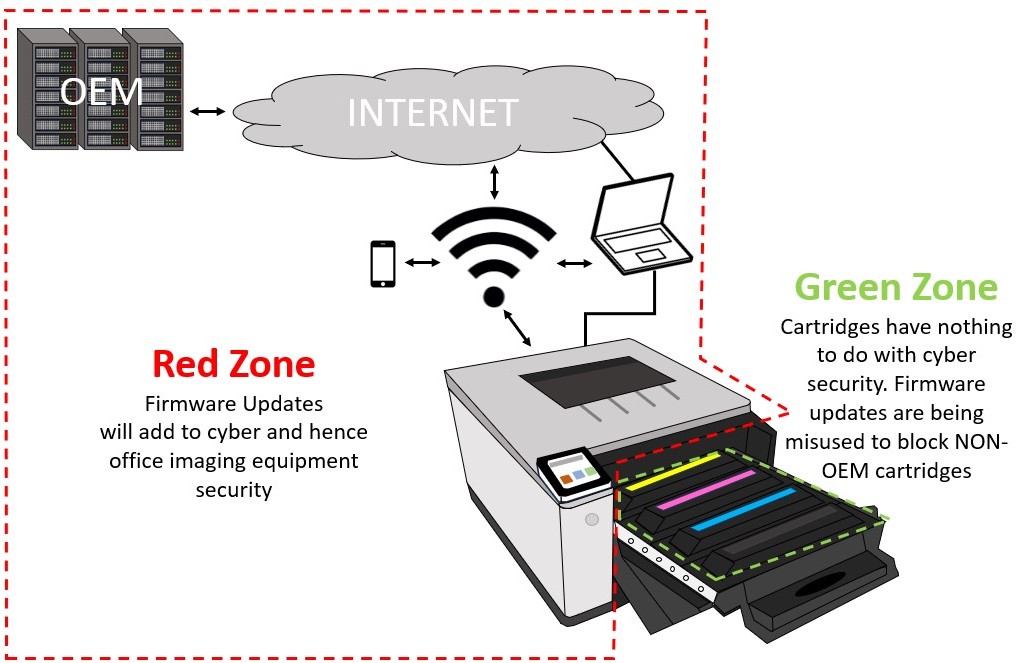
HP Inc.’s escalating warnings about the cybersecurity risks posed by third-party toner cartridges are raising increasing skepticism, with many viewing them less as responsible cybersecurity guidance and more as a calculated scare tactic aimed at preserving its multibillion-dollar consumables monopoly. While HP continues to highlight highly theoretical hacking scenarios—despite the lack of any real-world incidents involving everyday users—the company is also quietly rolling out firmware updates that block competitors’ cartridges, essentially forcing customers back into its own premium-priced supplies. This dual strategy has fueled accusations that HP is blurring the line between hypothetical risks and actual threats, using security concerns as a marketing weapon rather than a safeguard for users.
HP’s Shivaun Albright is HP’s Chief Technologist for Printing Security, is trying to scare users.
Despite offering rewards to hackers for identifying potential vulnerabilities, no meaningful, real-world attacks have been reported under normal conditions. Yet, HP persistently promotes the idea of third-party cartridges as a significant cybersecurity threat. At the same time, it deploys “dynamic security” features designed to restrict cheaper alternatives, locking consumers into a more expensive, closed ecosystem. Critics argue this is a classic case of fear-based messaging, where an exaggerated and highly theoretical risk is used to justify anti-competitive practices. The result, they claim, is not improved security, but reduced consumer choice, higher costs, and growing suspicion that “security” is being used as a convenient excuse to restrict alternatives and maintain a monopoly. Ultimately, consumers end up paying more—not because they are safer, but because they have fewer choices.






















